Strip & Wax Service: The Complete Guide to Longer-Lasting, Better-Looking Floors
If your floors are looking dull, scuffed, or impossible to “clean back to shiny,” the issue often isn’t your day-to-day cleaning… It’s your floor finish that’s worn out.
A professional strip & wax service (also called floor stripping and waxing, or strip and refinish) removes old, built-up finish and replaces it with fresh protective coats. Done properly, it restores shine, improves cleanliness, and helps your floors hold up longer under daily wear.
Quick answer (for the busy ones):
A strip & wax service removes old floor finish and applies new coats of protective floor finish to restore shine and protect the surface underneath. Most commercial buildings schedule strip & wax 1–2 times per year, while high-traffic areas may need more frequent maintenance using a scrub & recoat plan in between.
What floors can be stripped & waxed?
Strip & wax works best on floors designed to accept a finish system, such as:
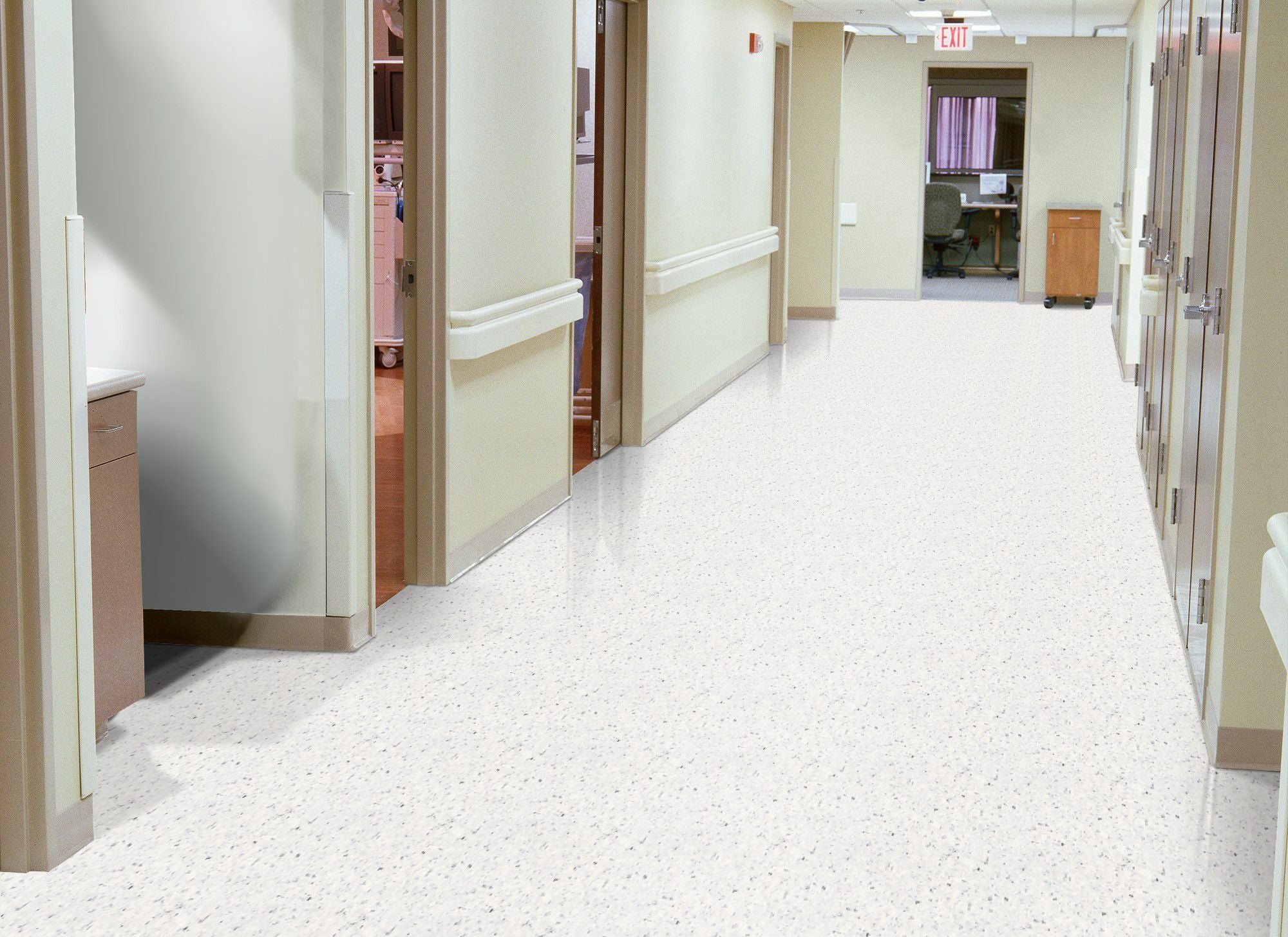
- VCT (Vinyl Composition Tile) (most common)
- Some sheet vinyl / resilient floors that accept finish (manufacturer dependent)
- Certain commercial linoleum systems, with the correct products and method
Not sure what you’ve got? No stress. We can confirm your floor type during a walk-through.
What floors should NOT be stripped & waxed?
Not all hard floors are candidates. Many modern floors are “no-wax” systems or require different coatings entirely.
In most cases, strip & wax is not recommended for:
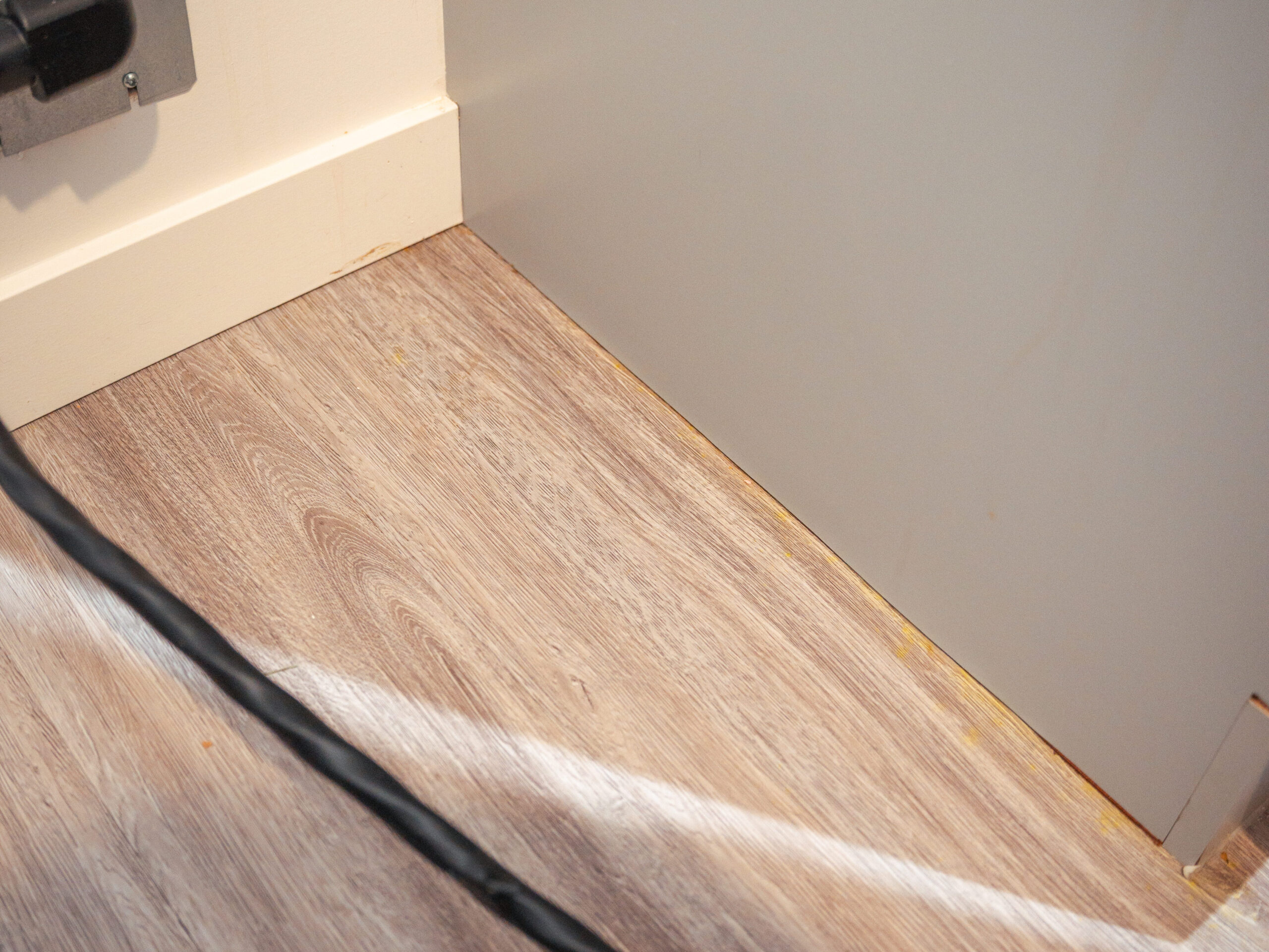
- Many LVT/LVP products (often “no-wax” wear layers; follow manufacturer guidance)
- Laminate
- Hardwood (different refinishing system entirely)
- Natural stone (requires stone-specific restoration)
- Most ceramic/porcelain tile (tile isn’t “waxed” the same way, or coating options vary)
Our rule: right chemistry, right surface. If the manufacturer’s guidance says no, we won’t force it.
What to AVOID after a strip & wax service
Your finish is most vulnerable right after it’s applied — so a little care goes a long way.
Avoid for the first 24–48 hours (or as advised onsite)
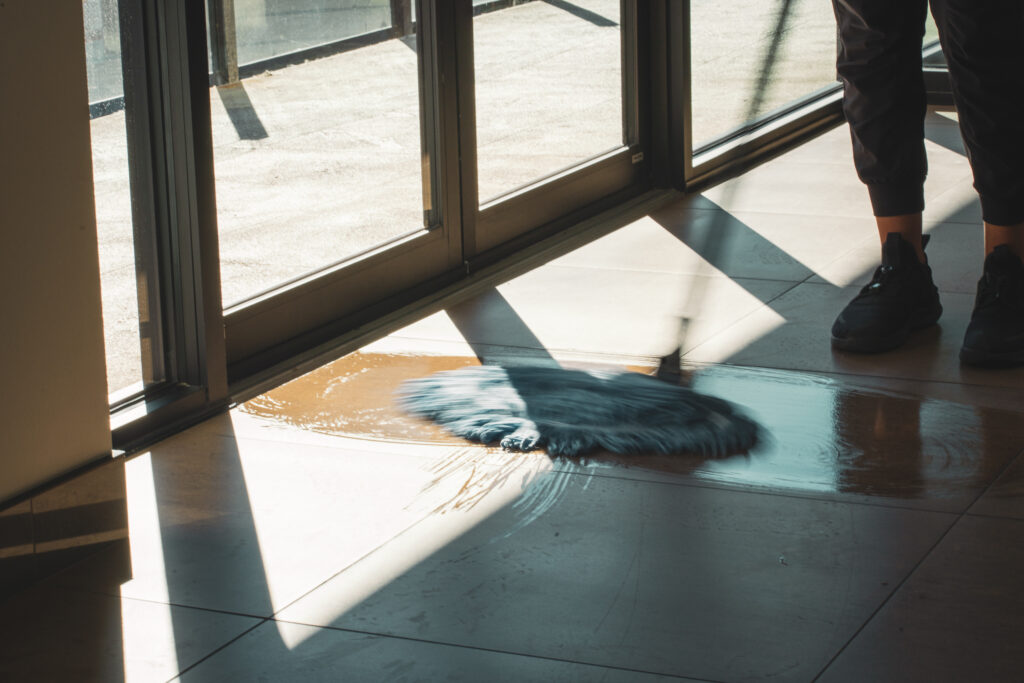
- Wet mopping/excess water
- Dragging furniture (lift or use protectors)
- Harsh chemicals or anything not designed for finished floors
- Steam mops (heat and moisture can streak or damage some finishes)
Finish killers (ongoing)
- Grit/sand at entrances (missing mats = scratched finish)
- Over-wetting during cleaning
- Wrong pads/brushes on autoscrubbers
- High-pH degreasers used as routine cleaners
What to do before we arrive (quick prep checklist)
Want the smoothest service with the least disruption? This helps:
- Clear smaller items from the floor (bins, signs, light furniture)
- Tell us what can’t be moved (we can work in phases or lend a hand with the lifting)
- Provide access to water and power
- Plan traffic control for the work zones (we can help you stage it)
- If it’s a shared building: notify tenants (we can provide a simple notice)
How long does strip & wax take?
Timing depends on square footage, floor condition, and the number of coats that are needed. The biggest factor is usually traffic management.
We can often:
- Stage work by zones (lobbies first, corridors next, etc.)
- Schedule around tenant flow
- Recommend after-hours or weekend service where needed
If your building can’t fully shut down traffic, we’ll build a plan that keeps access safe and predictable.
What impacts strip & wax cost?
People often search “strip and wax cost”, and while every building is different, these are the biggest pricing drivers:
- Total square footage
- Condition of existing finish (heavy buildup takes longer)
- Number of finish coats requested
- Furniture moving/obstacles
- Access hours (after-hours vs daytime)
- Tight edges/corners and high-wear traffic lanes
If you’d like, we can quote based on a quick site walk-through (and tell you honestly if scrub & recoat will get you the result you want for less).
FAQ: Strip & Wax Service
How do I know if my floors need strip & wax?
Common signs:
- Floors look dull even right after cleaning
- Scuffs and black marks won’t come out
- Finish looks patchy, grey, or worn through in traffic lanes
- Floors stain easily, especially near entrances
How often should VCT floors be stripped and waxed?
Many facilities aim for every 6–12 months, depending on traffic and upkeep. Others do 1–2 times per year, plus scrub & recoat in between.
Can you strip and wax around tenants or during business hours?
Often, yes — especially if we stage by zones. For some buildings, after-hours is the best call. We’ll recommend the least disruptive plan.
What’s the difference between strip & wax and buffing?
Buffing/burnishing restores shine to the existing finish. Strip & wax removes the old finish and rebuilds the finish system.
Service Area: Kelowna & the Okanagan Valley
Good Sorts provides strip & wax and hard floor maintenance for commercial buildings across Kelowna and the Okanagan Valley, including offices, multi-family common areas, strata buildings, retail spaces, and more.

Ready to get your floors sorted?
If your floors are overdue (or you’re not sure what surface you have), we’ll assess the floor type, traffic lanes, and current finish, then recommend the most cost-effective plan: strip & wax, scrub & recoat, or a different hard-floor service that better fits your building.
Reach out to our team to schedule a walk-through, and we’ll recommend the best plan for your floors.