Let Cleaners Clean: Why Clear Ownership Matters in Commercial Cleaning
There’s a familiar way cleaning gets divided up in workplaces.
A few things sit with the cleaning company. A few things get left to staff. Someone keeps an eye on the kitchen, someone else deals with the garbage, and whoever notices the front door looking rough gives it a quick wipe.
On the surface, that can work just fine.
The problem is that cleaning is one of those jobs that becomes surprisingly easy to lose track of when it sits between different people. Everyone is busy. Everyone has a primary role. And when cleaning is treated as something people will “just take care of” around everything else, it tends to be one of the first things pushed aside when the day gets hectic.
Nobody is necessarily doing anything wrong. The work just doesn’t have a clear owner. That’s where we think the idea of letting cleaners clean comes in.
It isn’t about saying every cleaning task needs to be outsourced, or that employees shouldn’t look after their own space. It’s about making sure the work is deliberately assigned to someone who has the time, tools, and responsibility to actually do it.
Because when cleaning becomes everybody’s side job, it has a habit of becoming nobody’s job.
Cleaning Works Better When Somebody Owns It
Most businesses wouldn’t run payroll, sales, maintenance, or customer service with only a vague understanding of who is responsible for what. Cleaning deserves the same clarity.
Shared responsibility can absolutely work. A commercial cleaning company might take care of washrooms, floors, garbage, and common areas while employees keep their own desks and staff kitchen tidy. A front desk team might keep an eye on the entrance throughout the day.
There’s nothing wrong with that setup.
The important part is that everyone understands where their responsibility starts and stops.
Problems tend to show up in the gaps. The entrance glass gets progressively worse because one group thinks another has it covered. A task gets removed from the commercial cleaning scope, but nobody explicitly assigns it internally. Someone technically owns an area, but cleaning it continually loses out to work that feels more urgent.
Eventually, what started as a small grey area becomes visible enough that somebody notices.
Then comes the familiar conversation:
“I thought the cleaners did that.”
“We thought your team did that.”
Neither side necessarily dropped the ball. The ball was never clearly handed to anyone in the first place.
A strong cleaning plan should remove as much of that ambiguity as possible. Cleaning industry guidance recommends assessing the actual facility, including its condition, traffic, flooring, soiling levels, and unique cleaning requirements, before establishing the scope and schedule. (ISSA)
That doesn’t need to become a 40-page manual for every workplace. It just needs to be clear enough that people know what is expected and who owns the result.
Your Team Can Clean. That Doesn’t Always Mean They Should.
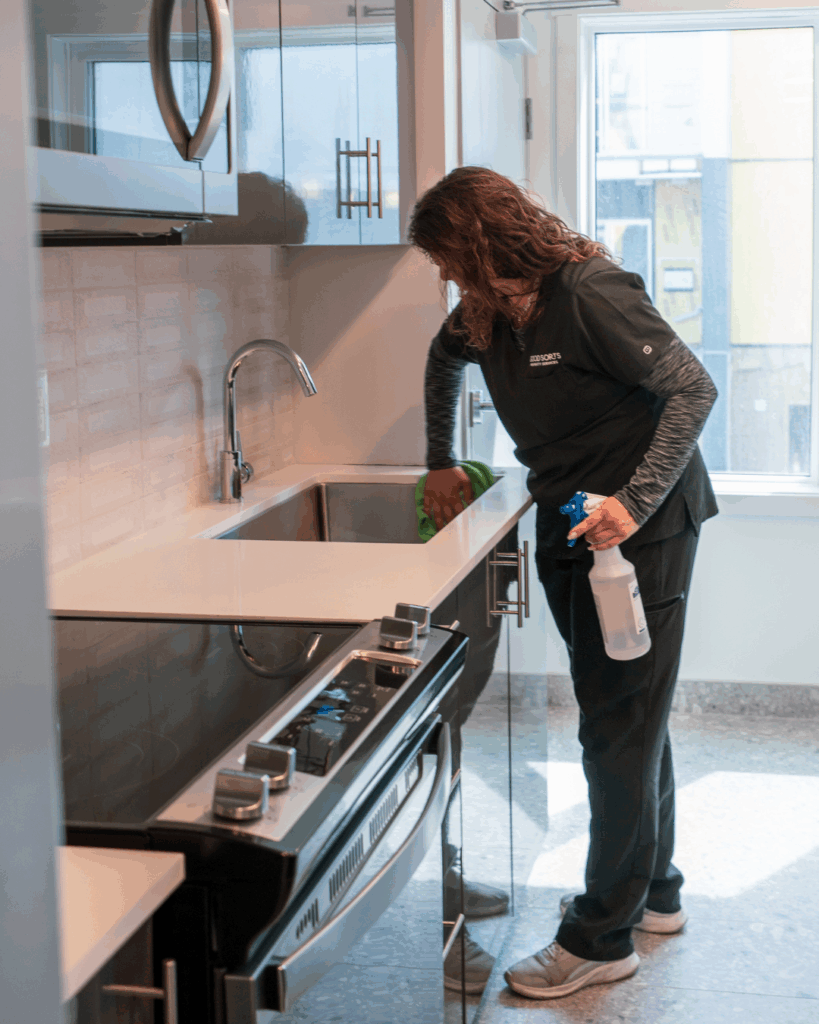
Most people are perfectly capable of wiping down a counter, taking out a garbage bag, or running a vacuum over the floor.
The question isn’t whether they can clean.
The better question is whether it makes sense for cleaning to be part of their job.
Someone who has been hired to serve customers, manage a team, maintain equipment, coordinate an office, run a building, or keep operations moving already has a primary responsibility. When that work competes with cleaning, the primary job is naturally going to win.
The customer standing in front of them matters more than the fingerprints on the glass. The equipment issue gets dealt with before the hallway gets vacuumed. The phone rings. Somebody needs help. A deadline moves up.
The cleaning task slips.
That isn’t laziness. It’s prioritization.
This becomes especially relevant for facilities and operations teams, where cleaning may already sit alongside maintenance, security, budgeting, project management, space planning, grounds management, and other responsibilities. IFMA describes facility management as encompassing a similarly broad mix of operational functions. (IFMA)
Adding cleaning into that workload can make perfect sense. But if the expectation is that it will happen consistently, it needs to be treated as a real responsibility rather than something somebody will squeeze in when everything else is done.
Because everything else is rarely done.
There is also a difference between keeping a workplace generally tidy and operating a cleaning program. Once people are regularly using workplace cleaning chemicals, employers may have additional responsibilities. In British Columbia, hazardous products covered by WHMIS are subject to requirements around labels, safety data sheets, and worker education and training. (WorkSafeBC)
That doesn’t mean wiping crumbs off the lunchroom counter needs to become complicated.
It simply means that professional cleaning involves more than the visible task itself.
Cutting Cleaning Hours Doesn’t Make the Work Disappear
Cleaning is an operating cost, and businesses should absolutely ask whether they are getting value for what they spend.
We think that’s a healthy conversation.
A commercial cleaning scope shouldn’t sit untouched year after year simply because it has always been done that way. Workplaces change. Teams grow or shrink. Traffic patterns change. Spaces get repurposed. What needed daily attention two years ago may not need it today.
Sometimes it makes sense to bring certain tasks in house. Sometimes an area can be cleaned less frequently. Sometimes a hybrid model gives you the best result.
But removing work from a cleaning contract doesn’t make that work disappear.
It moves.
If an employee is now spending time completing the task, there is still a labour cost. Products and equipment still cost money. Somebody still needs to manage the responsibility, and somebody needs to notice when it hasn’t happened.
That is why the better question isn’t always:
What can we cut from the cleaning contract?
It’s:
Where should our cleaning resources actually be going?
That shift matters.
Instead of looking for a blanket reduction in cleaning hours, look at how the workplace is actually being used. A front entrance that sees hundreds of people might need regular attention, while a low-traffic storage area probably doesn’t. A busy washroom requires a very different cleaning plan from one used by a handful of employees.
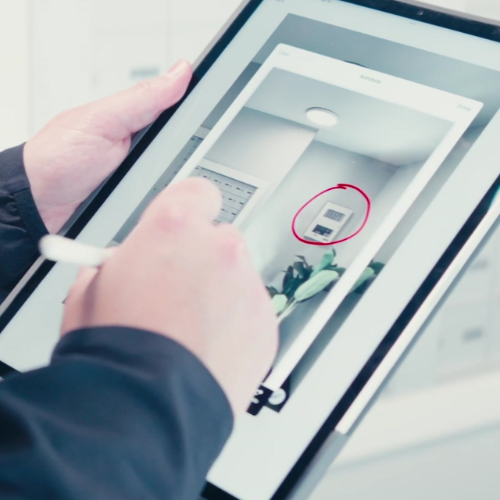
Professional cleaning schedules are commonly built around this kind of workload analysis. ISSA, for example, uses factors such as square footage, tasks, and production rates when calculating cleaning time. (ISSA)
The goal isn’t to have the biggest cleaning scope.
It isn’t to have the smallest one either.
It’s to have the right one.
Good Commercial Cleaning Should Adapt to the Workplace
A good commercial cleaning company should be able to look at a workplace and help determine what actually needs to happen there.
That means understanding how the space is used, where the busiest areas are, what tends to generate complaints, what the internal team already handles well, and where professional cleaners can add the most value.
The answer might be more cleaning in one area and less somewhere else. It might mean changing frequencies. It might mean leaving certain responsibilities with employees because that genuinely makes the most sense.
The important part is that those choices are deliberate.
A commercial cleaning plan also needs some way of determining whether it is working. Cleaning standards and industry guidance recognize inspection and performance measurement as part of evaluating cleaning effectiveness rather than relying exclusively on complaints to identify issues. (ISSA)
Because if people around the office are starting to notice what’s being missed, the problem has probably been there longer than it should have.
A good cleaning provider should be helping close that loop. Not just supplying labour, but understanding the expectations, checking the result, communicating when something changes, and adjusting the service when the workplace changes.
It’s Not Really About In House vs. Outsourced Cleaning
It would be very convenient for us, as a commercial cleaning company, to tell you the answer is simply to outsource everything.
It isn’t.
A good in house cleaning team can deliver excellent results. So can a good outsourced commercial cleaning provider. Plenty of workplaces successfully use a mixture of both.
The common denominator is ownership.
If your employees own certain cleaning tasks, make the expectation clear and give them a realistic opportunity to complete the work.
If your cleaning company owns them, put them in the scope and expect the work to be done.
If responsibility is shared, make the handoff between the two obvious.
That’s where things tend to fall through the cracks.
Most cleaning problems don’t begin because somebody suddenly decides they don’t care. They start quietly. A responsibility changes hands. Someone assumes another person has it. A task gets removed from a scope and never properly lands anywhere else.
One small miss becomes another.
Eventually, someone looks at the same area everyone has been walking past for weeks and asks:
Whose job was this?
A good cleaning program should have answered that long before anyone needed to ask.
So challenge your cleaning costs. Review your scope. Change frequencies when they no longer make sense. Keep tasks in house where your team is genuinely best positioned to handle them, and use professional commercial cleaning where it adds the most value.
Just make sure somebody owns the outcome.
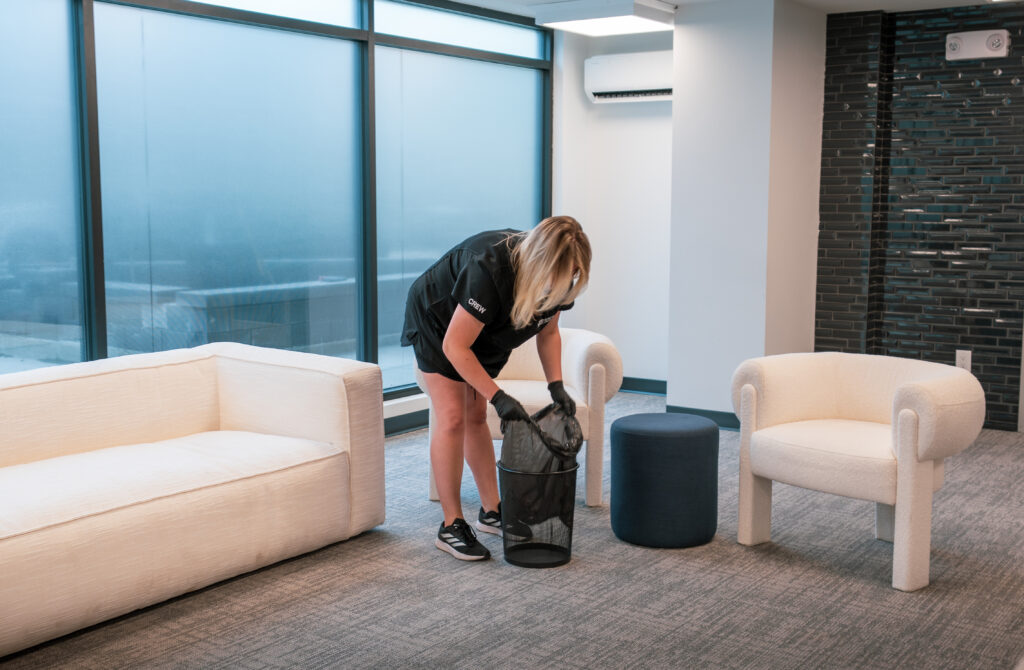
Let cleaners clean. Let your team do what they do best. And make it crystal clear who owns the rest.
Frequently Asked Questions
Should commercial cleaning be outsourced or handled in house?
There isn’t one model that works for every workplace. In house cleaning can make sense when there is enough consistent work to justify dedicated staff and the organization has the time and resources to manage scheduling, equipment, supplies, training, supervision, and quality control. Outsourcing can be a better fit when a business wants those responsibilities handled by a commercial cleaning provider. Many workplaces use a hybrid of the two.
What should be included in a commercial cleaning scope of work?
A good commercial cleaning scope should identify the areas being cleaned, the work expected in those areas, how often the tasks should happen, and who is responsible for them. The scope should also take into account the specific workplace, including its size, traffic, flooring, condition, operating hours, and any specialized cleaning requirements. Industry guidance similarly recommends assessing the facility itself rather than applying the same generic plan everywhere. (ISSA)
Can employees handle some workplace cleaning themselves?
Absolutely. Employees can reasonably take responsibility for appropriate tidying and clearly assigned cleaning tasks. The important part is ensuring those expectations are realistic and that people have the necessary time, products, equipment, and training. Where hazardous workplace products are involved, applicable WHMIS requirements also need to be followed. (WorkSafeBC)
How can a business reduce commercial cleaning costs without lowering standards?
Start by reviewing how the workplace is actually used instead of applying the same reduction everywhere. Look at traffic, cleaning frequency, problem areas, employee responsibilities, and whether cleaning time is currently being spent where it has the most impact. Cleaning workload can be assessed using factors such as square footage, task frequency, and production time rather than relying on guesswork alone. (ISSA)
Why hire a professional commercial cleaning company?
The value of a professional commercial cleaning company goes beyond having somebody perform the physical cleaning. A good provider should help establish the right scope, allocate labour appropriately, manage equipment and products, monitor cleaning performance, and provide clear accountability for the result.
Commercial Cleaning in Kelowna and the Okanagan
Good Sorts provides commercial cleaning and property services for workplaces and professionally managed properties throughout Kelowna and the Okanagan.
We believe good cleaning starts with understanding how a space actually operates, establishing clear expectations, and making sure somebody owns the result.
If you’re reviewing your current cleaning program, dealing with recurring service gaps, or wondering whether your existing scope still makes sense, talk to the Good Sorts team.
We’ll start with the space, understand what you actually need, and build the service around that.
No smoke. No mirrors. Just good sorts doing good work.